How to plan a motorcycle tour from the UK

To plan a motorcycle tour, fix your dates first, then decide how many miles a day you will actually enjoy, and only then choose a route that fits the days you have. Book the crossing and the first night once the route works, and leave the bike and paperwork checks for the last fortnight. I plan every trip in that order, and the Touring HQ tour planner does the sums for most of it.
I learned the order the hard way. On my first trip abroad I booked the ferry before I had a route, then found the roads I wanted needed two more days than I had off work. I spent the week riding motorway to stay on schedule. Planning the other way round fixes that.
The eight steps to plan a motorcycle tour, in order
- Dates and days on the bike. Count riding days separately from rest days and travel days.
- Miles a day. Pick a number you would still enjoy on day five.
- The route. Start from a route that already exists, then change it. Our free GPX routes are a good base.
- Split it into days. Let the days fall where the miles say, then move the ends to towns with beds and fuel.
- The crossing. Pick the port that puts you nearest the good riding. See the ferry and tunnel crossings.
- Beds. Book the first and last nights. Leave the middle loose if you can.
- The bike. Tyres, chain, brakes and a service, two weeks out, with the pre-tour bike check.
- Paperwork and kit. Licence, insurance, V5C and the rules for each country, then pack.
Start with dates, then count the riding days honestly
A week off work is rarely seven riding days. If you are going abroad from the south of England, the day you cross is mostly a travel day, and so is the day home. A nine day holiday from Saturday to the following Sunday usually gives me six or seven days of riding I actually want to do.
On anything longer than a week I put in one rest day. I do not always use it as a rest. It is the day that soaks up bad weather, a puncture or a pass that is shut, so the rest of the plan stays intact.
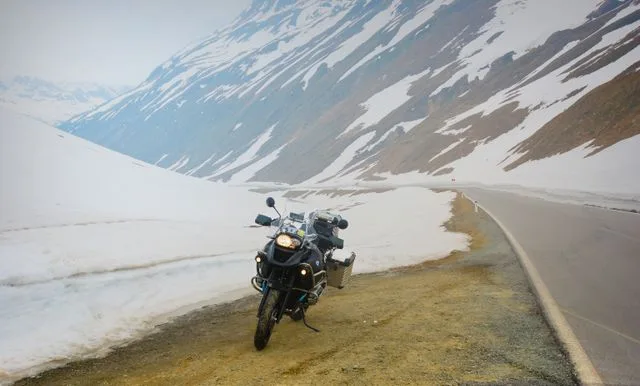
The time of year matters as much as the length. The high Alpine passes are normally open from June to October only, and the high section of Romania's Transfagarasan normally opens in early July. In the UK, I prefer the Scottish Highlands in May or September, when the single-track roads are quieter than in the school holidays. Check the route notes on each route page for the seasonal closures that apply.
How many miles a day to plan
I plan about 200 miles on a day of good A and B roads, and nearer 150 in the mountains, where the average speed drops to somewhere in the twenties on a hairpin climb. I once planned 300 miles over three passes in one day. I got to the hotel in the dark and cut the next day short because I was wrecked.
Two hundred miles sounds short to anyone who has done that distance on a motorway in three hours. Touring roads are slower, and you will want to stop for photos, fuel, coffee and lunch. A day that leaves an hour of daylight spare is a better day than one that does not.
Set your number in the tour planner and it splits the route for you, with the sunset and fuel stops for each day.
Choosing a route you will enjoy riding
Most people start with a destination, but I find it easier to start with the roads. If you know you want mountain passes, the choice is the Alps, the Pyrenees or the Picos. If you want coast and quiet, it is Brittany, the west of Scotland or Wales.
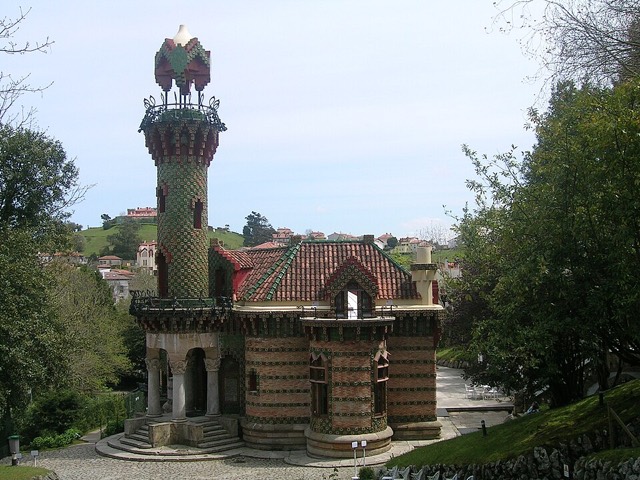
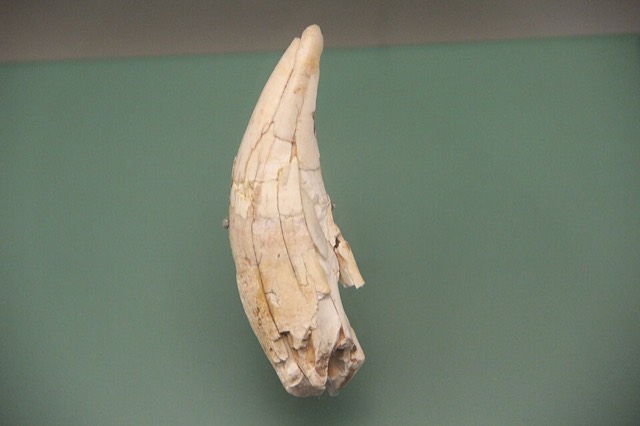
Santander, the Picos and the Cantabrian passes
440 miles, loop CA-231 A-67 CA-232 CA-322 N-611
Mountain roads straight off the ferry to Santander.
See the route and free GPX Castle of Pedraja: Codigowiki, CC BY-SA 3.0 es, via Wikimedia Commons. El Capricho: Cotarelo75, CC BY-SA 3.0, via Wikimedia Commons. cave of La Loja: Xuliu Pombar, CC0, via Wikimedia Commons.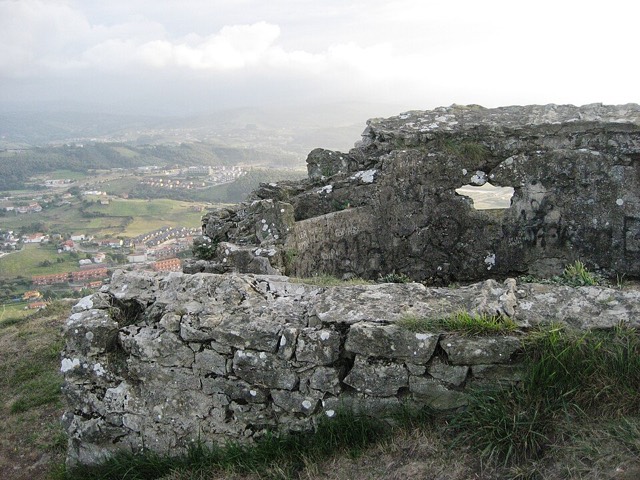


For ideas, start with our pick of the best motorcycle roads in the UK and the best motorcycle tours in Europe. Each one links to a route with a GPX file you can open in the planner and change.
Three things decide whether a route is good on a bike. The roads themselves, which you can judge from a map by how much they bend. The fuel gaps, because a 120 mile stretch with no fuel stops a bike with a small tank. And the traffic in the month you go. Gorges and lake roads that are lovely in May can be queues of camper vans in August.
If you want to draw your own line, our guide to using GPX files covers getting a route from a planning app onto a sat nav or phone.
Splitting the route into days, with beds and fuel at the end of each
Open the route in the tour planner, set the start date and your miles a day, and it gives you each day with the sunset time at the finish, the fuel stations along the line and the longest gap between them, and places to stay near the end point.
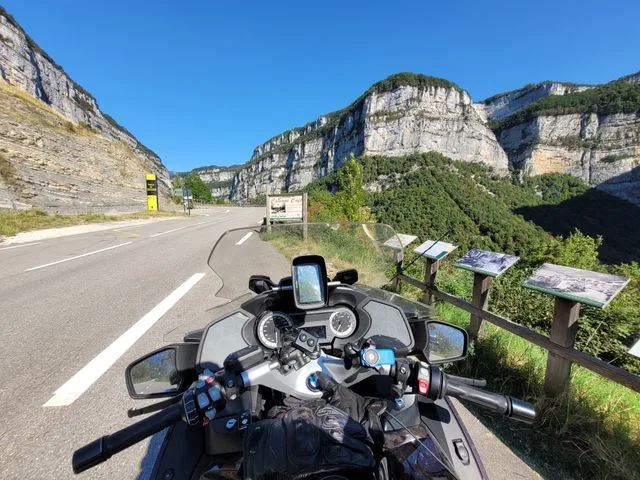
Then I move the ends. The planner puts the end of day three wherever the miles run out, which might be on a moor with nothing for 20 miles. I nudge it on to the next town with a hotel or a campsite and fuel, and let the next day absorb the difference.
Check sunset for every day. On a trip in late September I rode the last hour of a day in the dark on a mountain road because I had planned the miles without looking at the light. In a deep valley the light goes well before the sunset time.
Booking the crossing to Europe
For most of France and the Alps, the short crossings are cheapest and quickest: Dover to Calais or Dunkirk by ferry, or Folkestone to Calais through the tunnel. For Spain, the long ferries from Portsmouth and Plymouth save two days of riding through France. For Norway, Germany and the Netherlands, the North Sea crossings from Hull, Newcastle and Harwich are worth comparing.

Pick the crossing after the route, because the right port depends on where the good riding starts. The crossings page lists every route that takes motorcycles, grouped by where you land, with a link to each operator. We do not show prices, because they change daily.
For a trip to Scotland, the Lake District or Wales there is no crossing to book, so put that effort into the first night instead.
Where to stay, and how much to book ahead
I book the first night and the last night before I leave. The first night is when you are tired from the crossing and do not want to hunt for a bed, and the last night is when you need to be sure of making the ferry.
The nights in between I book a day or two ahead from the road, unless I am going somewhere busy in peak season. The NC500 in July, the Dolomites in August and anywhere on the Route des Grandes Alpes in a French school holiday are all worth booking in advance.
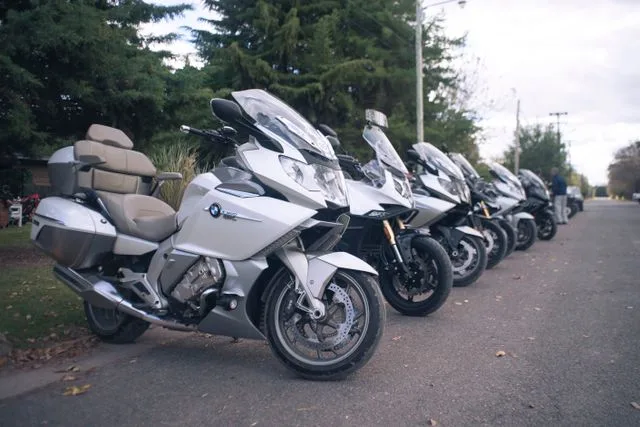
What matters for a bike is somewhere off the street to park and somewhere to dry kit. Ask the hotel about parking when you book. A private car park or a garage makes a real difference to how well you sleep with luggage on the bike.
Costing the trip before you commit
The big costs are the crossing, beds, fuel and food. Tolls matter in France, Italy and Spain if you use the motorways, and Switzerland and Austria sell motorway vignettes.
The trip cost calculator works out fuel for your bike's economy and the route's distance, and adds the other costs you enter. If you are riding as a group, the tour planner's group trips have a spending log that splits costs and shows who owes whom.
Getting the bike ready, two weeks out
Two weeks before you go is the point to check the tyres, the chain and sprockets, the brake pads and the fluids, and to book a service if one is due on the trip. Any later and you might not get the parts.
A tyre that is legal when you leave can be near the limit after 2,000 miles of loaded riding, so start a long trip with plenty of tread. Our bike check lists what to look at, and you can tick it off on your phone.
Work out your real fuel range with luggage on, because it is lower than the brochure figure. The fuel range calculator does it from your tank size and economy.
Paperwork for riding abroad
For a UK rider on a UK registered bike, the basics for Europe are a photocard licence showing your motorcycle category, insurance that covers you abroad with proof of it, the bike's V5C log book, and a UK identifier on the number plate or a UK sticker. GOV.UK's guide to driving abroad is the official source, and the rules change, so read it before every trip.

Each country adds its own. France has Crit'Air stickers for low emission zones, Switzerland and Austria sell motorway vignettes, and several countries ask you to carry extra kit. Our riding in Europe page links to the official page for each country, and the tour planner builds a checklist for the countries on your route.
Check whether your breakdown cover works abroad, because not every UK policy does. The cover page lists what to ask about.
Packing for a motorcycle tour
Pack last, once you know the route and the weather. I lay everything out, then take a third of it away, because a lighter bike handles better on a loaded hairpin and leaves room for things you pick up on the way. Our motorcycle touring packing list is a good place to start, and the checklist for the week before you leave covers the jobs people forget.

Where to go next
If you have the dates, open the free tour planner and pick a route to see how it splits into days. If you need ideas first, browse the routes with free GPX downloads, or see every planning tool on one page.